
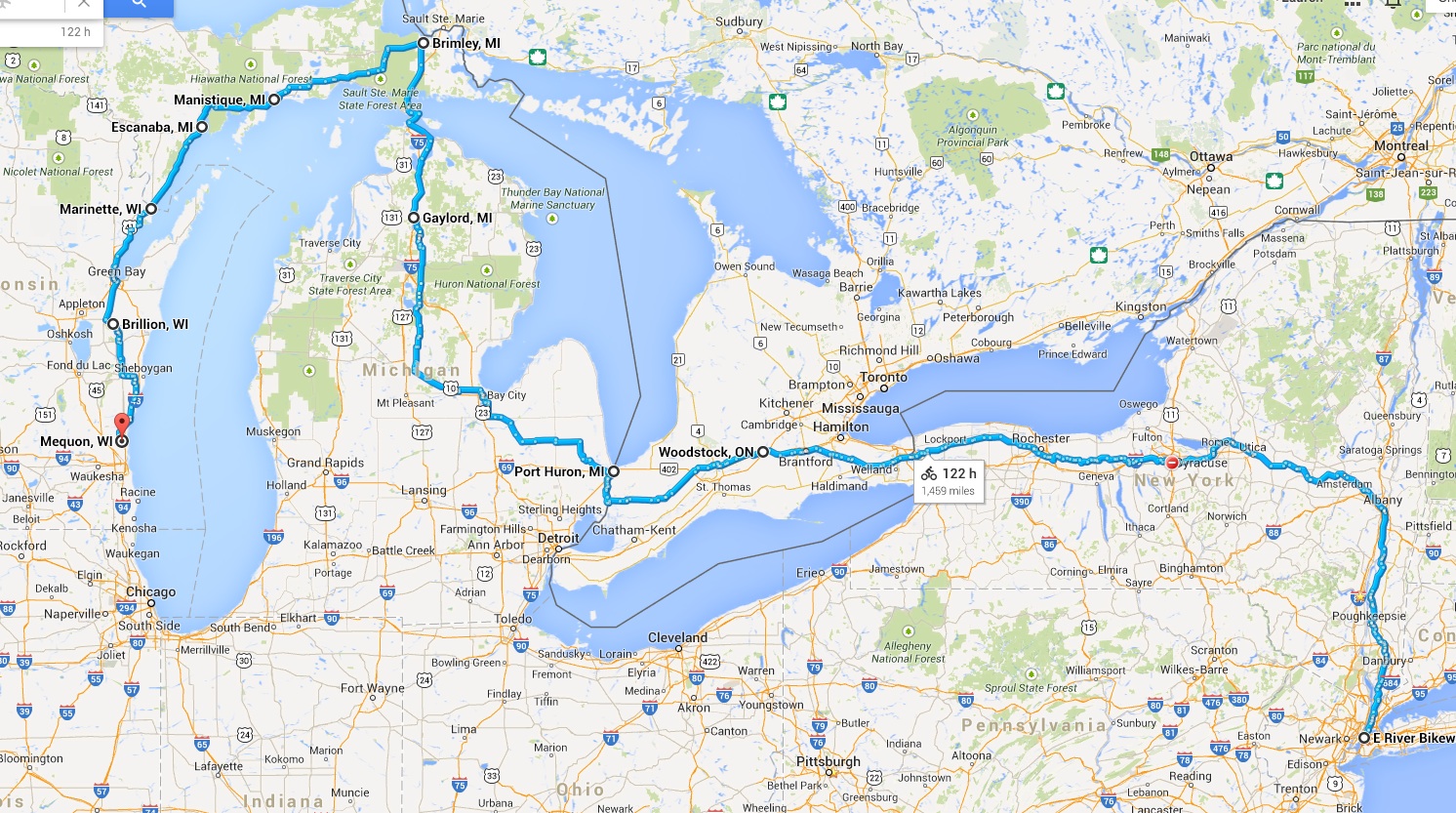
Today we pedaled 75 miles to Mequon, Wisconsin, the home of our friends and relations, Karen and Michael. You may recognize them; they hosted us on the 2011 Ride to Postville and we saw them in the Shenandoah Valley on the 2012 Ride to Nashville. They rolled out the red carpet and stuffed Jeffrey with pasta.
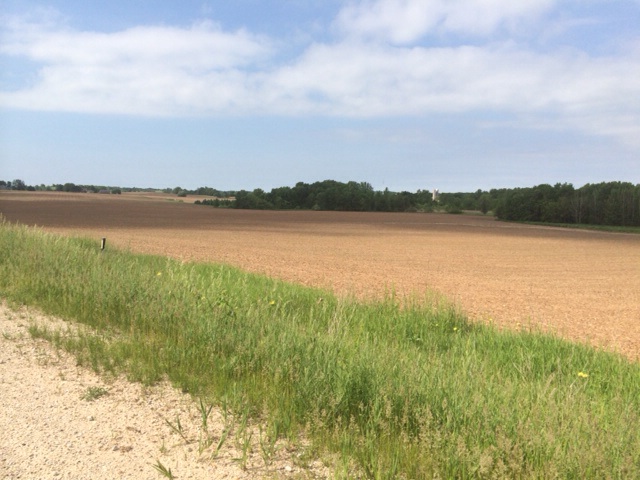
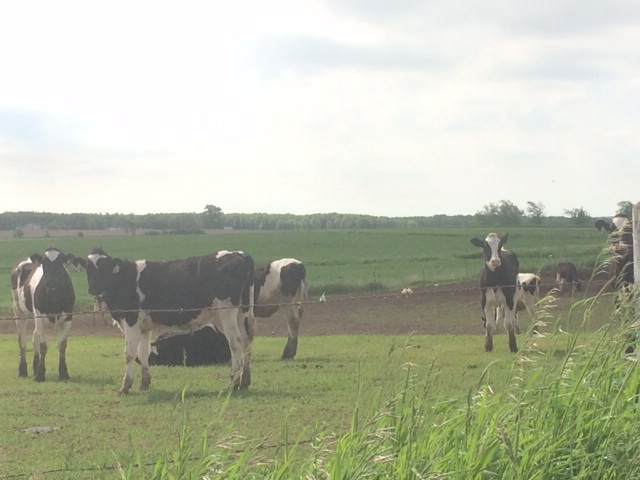
Except for some suburban bits at the end, today’s route was through rich farmland of striking beauty. Photos do not do it justice. Some of the terrain was flat; some was hilly with moraines left by glaciers from the Ice Age that ended about 11,000 years ago.
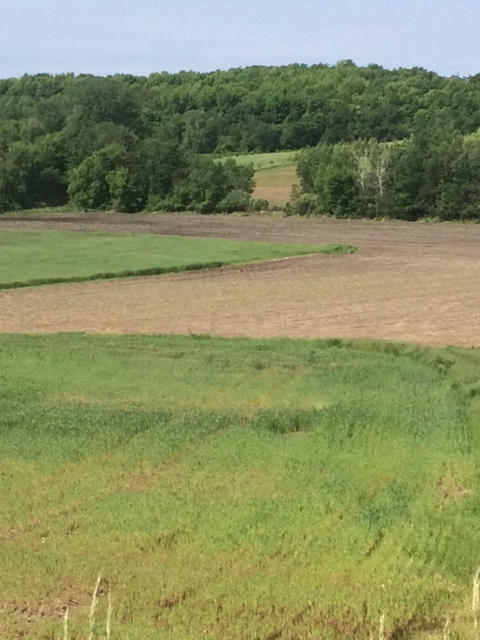
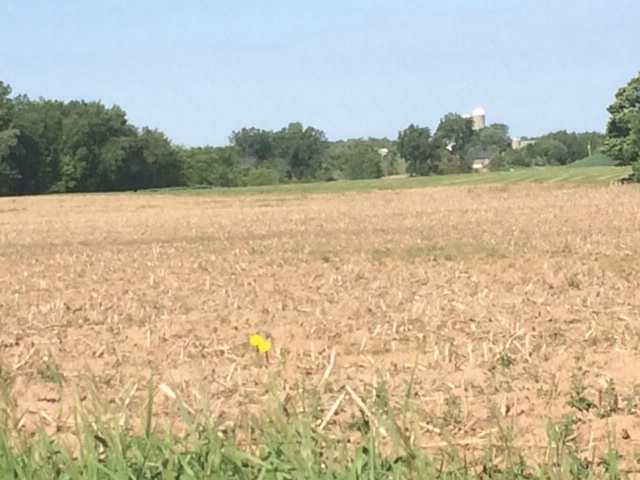
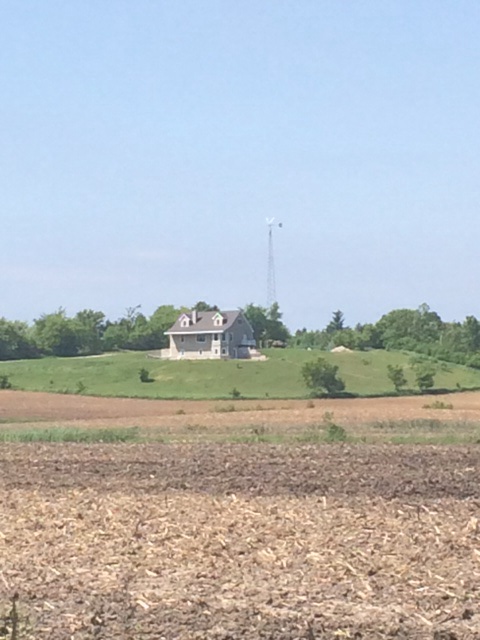
That last house has a wind turbine.
Along the way, we saw young women bicycling, a guy at a gas station who applauded our journey, farmers on their tractors. People peacefully going about their business.
Jeffrey was reminded of a remark made by a Burmese client for whom he won political asylum. The young man was released from immigration “detention” (jail) and Jeffrey brought him home to the leafy old New Jersey town where Jeffrey and his family then lived. The Burmese saw the river, the trees, the grass, and burst out, “Here you could live forever!” Jeffrey knew what he meant. The cleanliness, the peace, the plenty, the order. No checkpoints or soldiers. People in America’s green places do not live in the fear that dominates life in much of the world. It’s Paradise, really.
There are other Paradises. In Postville, Iowa, on the 2011 Ride, Guatemalan workers told Jeffrey how they came to be in Iowa. They lived in their own Paradise, a little mountain village, and worked in the rich landlord’s fruit orchard. The fruit trees were old. The landlord decided to cut down the trees and plant new ones. Until the new trees bore fruit in 10 years, the villagers would have no work. That was not the landlord’s concern. The villagers had to move or starve. There was no work for them in Guatemala, no land, nowhere to move. But there was work in cold, distant, alien Iowa.
Remember this when people tell you that immigrants and refugees who come to the U.S. should stay home. Many, perhaps most, wish they could. But because they fear persecution, or they face starvation or violence, they can’t.
American immigration law is indifferent to many kinds of human suffering. The breakup of families, the exclusion or expulsion of good people who are threatened for reasons that do not fit narrow legal definitions, are business as usual for our immigration enforcers.
Under America’s constricted laws, it is hard to find ways to give relief to those whom our consciences and religions say we should help. It’s shameful that when a person happens to be eligible for relief, we may not realize it because that person has no lawyer to help present her case. By finding and training free lawyers for refugees, Human Rights First injects a bit of rationality and humanity into America’s immigration system.
We need Human Rights First, because Paradise isn’t only beauty and order. In Paradise there must be “liberty and justice for all.” For all.
 Ride for Human Rights